Thứ Tư, 16 tháng 11, 2016

Some of the best Newt facts for kids

How awesome it is! Let’s find out below amazing information: Some of the best Newt facts for kids

1. ONE SPECIES DEFENDS ITSELF WITH MOVABLE RIBS.


Prod a Spanish ribbed newt (Pleurodeles waltl) at your own risk. These flat-headed animals have a nasty surprise in store for wannabe predators: They can rotate their ribs forward so that they break through the skin, creating protective spikes. And that's not all: When the ribs break through, they're coated with a poison that is secreted simultaneously. Once danger passes, the ribs retract and the punctured skin starts to heal. Learn all valuable information you wanted about science facts via our articles.
 
2. IN MEDIEVAL EUROPE, NEWTS WERE ASSOCIATED WITH EVIL SPIRITS.


Legend had it that witches could summon demons via a newt-based brandy. The Bard himself referenced this in Macbeth: Act IV opens with Shakespeare’s witches tossing such ingredients as “eye of newt and toe of frog” into their special brew.

3. SOME CAN RE-GROW THEIR EYE LENSES AT LEAST 18 TIMES.

That fact that most lizards can replace a lost tail is common knowledge, but newts make this talent look like a party trick: After losing a limb, they can grow another one in a matter of weeks.

Newts are also capable of regenerating tails, jaws, spinal cords, heart ventricles, and eyes. But can they do so indefinitely? Between 1994 and 2010, a team from University of Dayton tested the limits of this healing superpower. Over those 16 years, half a dozen Japanese newts (Cynops pyrrhogaster) had their eye lenses surgically removed 18 times apiece. The results were unbelievable: Not only did new lenses appear after every single extraction, but the replacements functioned just as well as the originals had.

According to Panagiotis Tsonis, who headed up the experiment, the discovery could have enormous medical implications. “We are still a long way from relating this to humans,” he told Wired UK, “but what this shows is that the newt is an excellent source for finding answers to regeneration.”

4. THE EASTERN NEWT (NOTOPHTHALMUS VIRIDESCENS) IS NEW HAMPSHIRE'S STATE AMPHIBIAN.


In 1985, New Hampshire became the first state to designate an official amphibian. Seventeen others have since done likewise, but they’ve all picked non-newts. Notophthalmus viridescens has a huge range extending from Canada to Florida and from New England to Kansas. Anyway, this may be one of the most fascinating animal facts until now

5. CERTAIN NEWTS WILL METAMORPHOSE TWICE.


Like most amphibians, newts start out as gilled, water-bound larvae that grow up into air-breathing adults. However, some actually assume an intermediate form. After leaving their larval stage, many species, like the eastern newt, become bumpy-skinned juveniles, or efts, adapted for life on dry land. A few years later, they return to the water as aquatic adults, complete with webbed feet and paddled tails.

6. AMOROUS MALES SECRETE REALLY POTENT PHEROMONES.


The key to a female newt’s heart is through her nostrils. When mating season rolls around, male Alpine (Ichthyosaurua alpestris) and palmate (Lissotriton helveticus) newts release a titillating cocktail of pheromones into the water to attract nearby females. The courtship ritual begins with a male waving its tail at a female, who then follows him around for a bit. When she's ready to mate, she touches her nose to his tail, and he deposits a spermatophore on a leaf or other surface; he'll lead her to it, and it will stick to her cloaca and eventually lead to insemination.

A 2011 experiment showed that the pheromones might work a little too well—in fact, the scent rendered captive females uncontrollably lustful. No males were present, so they started courting each other. “We were convinced that if we put in a plastic toy moving at the right speed, they would follow it,” said researcher Franky Bossuyt of Vrije Universiteit Brussel. 

7. SPANISH RIBBED NEWTS HAVE BECOME AMPHIBIOUS ASTRONAUTS. 


Between 1985 and 2005, six different missions sent Pleurodeles waltl into orbit. Astronomers keep choosing this species in part because of its superhuman healing ability. Does a brief stint in the final frontier affect the ribbed newt’s limb regeneration process? For the most part, the answer is no—except for when you launch one that’s currently growing a new leg. Being in space slows down the appendage’s development. But when the newt returns to Earth, the growth rate accelerates beyond what’s considered normal.

Scientists have also studied the effects of extraterrestrial travel on P. waltl embryonic development. Females give birth to live larvae and can keep sperm “on hold” inside their bodies for up to five months. When they detect the right hormone, the newts fertilize their eggs with this stored sperm. So we can observe P. waltl embryos that were actually conceived in outer space. Unfortunately, those fetuses are mostly deformed. Those who loves to discover nature will not want to miss our wide range of factoflife articles.

8. THEY MAKE BARELY AUDIBLE NOISES.


Newts may not be as vocal as frogs and toads, but if you listen closely, you just might hear them chatting. Eastern newts, for example, emit a faint “tic-tic-tic” sound. Meanwhile, California newts (Taricha torosa) will click while walking through unfamiliar terrain, squeak when handled, and ward off their rivals with a whistle.

Chủ Nhật, 13 tháng 11, 2016

Gerbil facts and infor you should know

I saw this writing by accident and just want to share with all of you about it. Enjoy interesting facts about Gerbils as below.


  1. Gerbils were originally known as ‘desert rats’ before they were introduced to North America and Europe as a companion species. Although they are rodents, they are a distinct group of animals from rats.
  2. Gerbils are able to shed their tail if it gets caught. This self-defence adaptation allows them to escape predators that are able to catch their tail as they try to flee. Their tails are around the same size as the rest of their body.
  3. Gerbils build extensive networks of underground tunnels. They spend most of their time in these burrows, only tending to leave to find food and water.
  4. Gerbils’ whole bodies, including their tails, are covered with fur. This is important for protecting them from getting sun-burnt in the hot desert regions.
  5. Gerbils have a quiet and calm nature. They are inquisitive and curious and not easily startled.
  6. When sensing danger, the normally quiet gerbil will let out a squeal and thump its back legs like a rabbit to warn others of the threat. Let’s discover some interesting science facts that will amaze you.
  7. Rather than using water, gerbils wash using sand. They roll around in the sand, which gets any debris off them and leaves them with a smoother and shinier coat.
  8. There are over 100 different species of gerbil. The largest being the Great Gerbil, Rhombomys opimus, which is native to Turkmenistan and can grow up to 16 inches long. The most common species kept as a pet is the Mongolian gerbil, Meriones unguiculatus. The Mongolian gerbil’s scientific name means ‘small-clawed warrior’.
  9. Gerbils are social animals, and live in groups in the wild. In domestic situations, unfamiliar gerbils are likely to be very aggressive to each other if forcibly introduced while still having contrasting scents.
  10. Gerbils are playful animals, and will often box and wrestle each other. Grooming is often carried out simultaneously here, illustrating that it is not an aggressive act. These dummy-fights can be vital for allowing young gerbils to learn to defend themselves in later life. It also helps maintain social bonds, although in adults such boxing can become a means of establishing rank in the dominance hierarchy.
Are you bored? Let’s have a quick look at our funny images that are bound to bring smile on your face.

Thứ Năm, 10 tháng 11, 2016

Some amazing Cow facts for kids

Get information and discover interesting facts about Cow that can challenge your knowledge

  • Cow are ruminates meaning they can digest food that can normally not be digested.
  • Like a human’s fingerprints, no two cow’s spots are exactly the same.
  • A cow is pregnant for nine months. A calf is about 90 pounds when it is born.
  • Cows have an excellent sense of smell. They can smell up to 5 miles away!
  • Cattle are herbivores that eat vegetation such as grass.

  • Cattle stomachs have four chambers which help break down what they eat
  • There are well over 1 billion cattle in the world.
  • Cattle are sacred in India.
  • There are an estimated 300 million cattle in India.
  • Young cattle are generally known as calves.
  • Like many other grazing animals cattle have one stomach which is divided into four compartments or chambers: the rumen, reticulum, omasum and abomasum. This allows them to digest grain and grasses most effectively.
  • Cattle have almost 360° panoramic vision. This helps them to see predators coming from any direction. Enjoy the best collection of animals facts on our site to widen your knowledge.
  • Cattle have an excellent sense of smell. They can detect odours up to five miles away. They can also hear both low and high frequency sounds beyond human capability.
  • The cow is a protected animal in Hinduism, and Hindus do not eat beef. Cows are honoured at least once a year, on Gopastami. On this day cows are washed and decorated in temples.
  • Mahatma Ghandi described a cow as “a poem of compassion”, also stating that “I worship the cow and I shall defend its worship against the whole world”.
Kết quả hình ảnh cho funny cow
  • The meat of cows is widely eaten by people across the world. Cows' milk is also drunk and used to make other products such as cheese. Many people who consume animal products would like to choose products from animals kept in higher welfare systems. However welfare labelling on products can be confusing. 
  • Adult females are generally called cows.
  • Adult males that are not castrated are generally called bulls.
  • Cattle are red/green color blind.
  • In the sometimes controversial sport of bull fighting, bulls are angered by the movement of the cape rather than its red color.
  • Cattle are farmed for a number of agricultural products including meat and dairy products.
If you’re looking for the most interesting tigers facts, you’re at the right place. Let’s check out now.

Thứ Hai, 7 tháng 11, 2016

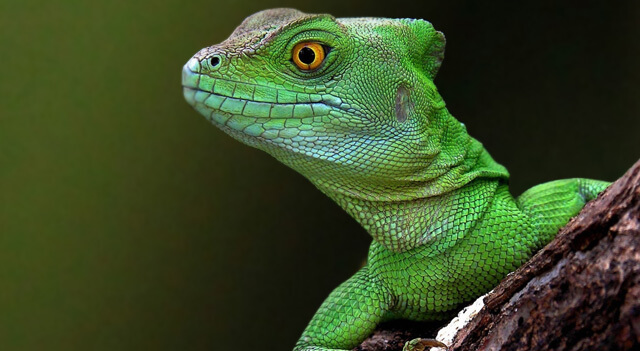
Lizard facts you had no idead about until now

Let's along with us find out the following lizard facts you had no idead about until now and other animal facts


  • There are some species of Lizards with very small legs or have no legs. They are often mistaken though for a type of snake. One way to tell is to look for eyelids and to see if you can find external ears. If those physical characteristics are found you will be able to identify it as a Lizard.
  • Lizards are able to smell by tasting the air around them. This is why they are often seen with their tongues going in and out at a rapid pace.

  • For the most part Lizards aren’t dangerous. There are two species though that have a dangerous venom. They are the Gila Monster and the Mexican Beaded Lizard.
  • The largest species is the Komodo Dragon. It can grow to a size of up to 10 feet. The smallest species are just a couple of centimeters long.
  • It is possible for the teeth of a Lizard to be replaced throughout their life. There are a few species though that don’t do this.
  • There are some species of Lizards that have the ability to squirt blood out of their eyes. They have horns and they are able to squirt blood for a distance of up to 4 feet. This is a way for them to be able to defend themselves against predators or when they feel there is any type of threat to them. Do you want to check out our long and rich source of tigers facts in your spare time?
  • Lizards are able to conserve water by excreting salt. When water is in short supply they will do this often and have a white reside on the body.
  • The Gecko is the only species of Lizard with vocal cords so they are the only ones that can make sound. The other species all use body language as a way to communicate with each other.
  • There are more than 5,600 different species of Lizards around the world.
  • There is evidence that Lizards have been on Earth for more than 200 million years. It is believed that some of them used to be as large as the dinosaurs.


  • The Chameleon is able to change the color of the body. This allows it to have a method of hiding from predators as it will blend into the surroundings.
  • Lizards live everywhere in the world except in Antarctica.
  • Lizards grow for their entire lives. They will shed their skin when they need to grow more.
  • All species of Lizards are cold blooded creatures.
  • Lizards enjoy spending time basking in the sunlight.
Just keep checking out our site everyday to get more updated news and information about everylife aspects as animal, plant or science facts and so on.

Thứ Ba, 13 tháng 9, 2016

Lion vs Tiger Ultimate Fight

Which animal will won in this fight: Tiger or Lion? Don't you know the answer? Don't worry, this writing will help you. Keep reading to know
For more: tiger facts                        

Well, let’s talk size first. Tigers are heavier, weighing up to 800 pounds to the lion’s 550. But the two cats aren’t so different in size. Here, their profiles are superimposed:


You might remember from high school health class that muscle weighs more than fat, which helps explain the tiger’s extra pounds. So it seems that the tiger would have a physical advantage over the lion.

But it turns out that we have some historical data to add to this conjecture, too. In ancient Rome, the tiger-lion face-off wasn’t uncommon. In 1959, a reader asked the Spokesman-Review this question, and the paper, in turn, asked William Bridges, the curator of publications at the Bronx Zoo. He told them that “back in the day of the Roman Coliseum, the smart money usually backed the tiger.” While we don’t have any great descriptions of the outcomes, ancient paintings of the event usually showed the tiger winning. And in the late 1800′s, the Gaekwad of Baroda, an Indian ruler, arranged a fight between the two beasts. Before the fight began, those running the bettor set the odds at 1 to 37,000 that the tiger would win. It did, and the Gaekwad lost 37,000 rupees.

And in 2011, a tiger killed a lion with a single paw swipe in a run in at Ankara Zoo in Turkey. The tiger apparently found a gap in the fence, and made its way into the lion’s enclosure. When they met, the tiger severed the lion’s jugular vein in just one stroke. Craig Saffoe, a biologist at the Smithsonian Zoo, also generally favored the tiger, telling LiveScience, “What I’ve seen from tigers, they seem to be more aggressive; they go for the throat, go for the kill. Whereas the lions are more, ‘I will just pound you and play with you.’”


But fighting in an arena, and even in a zoo, is quite different than fighting in the wild. If a tiger were to meet a lion without cages or screaming fans, what would happen? That’s actually a question that some conservationists are having to answer right now. There’s a plan to move some Asiatic lions to from the Gir forest to Kuno Palpur, where there are tigers. The University of Minessota’s Lion Research Center says that the plan has been delayed for fear that the native tigers would kill the lions. But in the wild, they say, tigers and lions fight quite differently:

Coalitions of male lions usually fight as a group against territorial rivals, so a tiger may have an advantage in a one-on-one encounter, since this is the typical mode of combat for a tiger. However, a lion coalition of 2–3 males would have a clear advantage over a lone tiger. A group of 2–4 female lions would have a similar advantage over a lone tigress.

They conclude that while one on one, a tiger would certainly best a lion, in the wild the lion pride could hold their own against the solitary tiger.

You might be like to see animals facts

Thứ Tư, 31 tháng 8, 2016

How do giraffes look like?

We all know that the giraffe is an African even-toed ungulate mammal, the tallest living terrestrial animal and the largest ruminant. Its species name refers to its camel-like shape and its leopard-like colouring. Keep reading for more giraffe and giraffe baby information.

Image result for What do giraffes look like?

Giraffes have incredibly long necks and vary in color from light tan to nearly black. They have markings on their coat that are as individual as a human's fingerprints.
Learn more: tiger facts                     

Image result for What do giraffes look like?

Giraffes are the tallest animals on the planet. The male giraffe grows up to 18 feet and the female giraffe reaches up to 14 feet. Along with a 6 foot long neck, they also have very long legs, that measure up to 6 feet. They have two small horns on the top of their heads that are known as ossicones; the ossicones are covered in hair and are part of the giraffe's skull.

Read more animal fun facts

Thứ Hai, 29 tháng 8, 2016

Collection of tigers facts

Here is collection of tigers facts, information and photos. Let's see:

Kết quả hình ảnh cho tiger facts

Basic information

Type: Mammal
Diet: Carnivore
Life span: 10-15 years
Size: Head and body, 1.5 to 1.8 m; tail, 0.6 to 0.9 m
Weight: 109 to 227 kg
Habitat: from the Siberian taiga to open grasslands and tropical mangrove swamps.
Range: Bengal Tiger is most numerous in the Sundarbans region of India and Bangladesh. It is also found in northern and central India and in Myanmar (formerly Burma) and Nepal.
Scientific name: Panthera tigris

Diet

Tigers mainly eat ambar deer, wild pigs, water buffalo and antelope. Tigers are also known to hunt sloth bears, dogs, leopards, crocodiles and pythons as well as monkeys and hares. Old and injured tigers have been known to attack humans and domestic cattle.

Population

In the early 1900s, there were around 100,000 tigers throughout their range. Today, an estimated total of around 3,000-4,500 exist in the wild. Below is a breakdown of tiger numbers by subspecies.
  1. Bengal tiger: Less than 2,000
  2. Indochinese tiger: 750-1,300
  3. Siberian tiger: Around 450
  4. Sumatran tiger: 400-500
  5. Malayan tiger: 600-800
  6. South Chinese tiger: Extinct in the wild
  7. Caspian tiger: Extinct
  8. Javan tiger: Extinct
  9. Bali tiger: Extinct
Range

Historic tiger range ran from Turkey through South and Southeast Asia to the far eastern shores of the continent. Today, they are only found in South and Southeast Asia, China and the Russian Far East.
Also see elephant facts

Behavior

Tigers occupy a variety of habitats from tropical forests, evergreen forests, woodlands and mangrove swamps to grasslands,savannah and rocky country. They are mostly nocturnal (more active at night) and are ambush predators that rely on the camouflage their stripes provide. Tigers use their body weight to knock prey to the ground and kills with a bite to the neck. They are also very good swimmers and have been known to kill prey while swimming.
Tigers essentially live solitary lives, except during mating season and when females bear young. They are usually fiercely territorial and have and mark their large home ranges.

Reproduction

Mating Season: In tropical climates, mostly from around November to April; during the winter months in temperate regions.
Gestation: 103 days.
Litter size: 3-4 cubs.
Cubs follow their mother out of the den at around 8 weeks and become independent at around 18 months of age. They leave their mothers at about 2 ½ years. Mothers guard their young from wandering males that may kill the cubs to make the female receptive to mating.

Thứ Năm, 18 tháng 8, 2016

Do cockroaches fly?

Did you hear about the flying capabilities of cockroaches? It is true. Let's see animal facts for more details


Adults of many species of cockroaches are endowed with wings. Adults of other species, and all nymphs (regardless of species) are wingless. Those adults that have wings tend to fly mainly when disturbed. Generally, they're ungainly in flight, a bit more than just falling with style. Even then, they fly better than do some kinds of birds (such as ostriches, emus, rheas and penguins). The latter, of course, 'fly' quite well underwater. No cockroach is adept beneath the waves. Lastly, some cockroaches fly quite well in 'economy', 'business' and even 'first' class aboard aircraft.

Most species of cockroach can fly if they actually want to (at least those that still have wings, some like the Madagascar hissing cockroach they always made people eat on Fear Factor have lost their wings and are flightless). 

The reason most of them don't fly is that they actually kind of suck at it. 

Cockroaches have made a very successful niche for themselves as cryptic little insects that run very quickly for cover when they are threatened. Their first instinct for escape is now to scurry, rather than take flight and fly away. 


Flying cockroaches are pretty large, slow moving, and not terrifically maneuverable. When cockroaches first evolved, this was probably sufficient to make them and the other early insects like stoneflies, mayflies and crickets masters of the air, but once aerial predators like birds started evolving, they became pretty easy pickings. 

A cockroach flying through the air now would be the target of every bird that saw it. A big, juicy meal flapping furiously to bumble its body along. 

Those cockroaches that are relatively strong fliers (like the Asian cockroach, or the Cuban cockroach) usually only fly at night, when there are fewer predators to see them. Even then, they're probably easy pickings for any bat that might be about.

For more facts of life

Penguin Physical Characteristics

I love to know and share amazing penguin facts and at this time, I will introduce you some basics about their physical characteristic

The shape of a penguin body is perfectly adapted to a life in the sea. As Kevin Shafer appropriately writes in his book Penguin Planet: "Fat in the middle and tapered at both ends". With this streamlined shape a penguin experiences the least possible resistance while swimming in the ocean.


All penguins are black with white undersides, and are commonly described as wearing tuxedos. This color pattern acts as camouflage when the penguin is swimming, protecting it from predators. From underneath, the white belly blends with the bright water surface, and fromabove, the black back is indistinguishable from the dark water. Penguin species can be grouped according to common characteristics. Banded penguins have black and white stripe patterns on their chests and heads. The crested penguins all have bright yellow or orange plumes on their heads. Brushtail penguins have long stiff tail feathers. The king and emperor penguins have bright yellow and orange chest and head patches, and the yellow-eyed penguin has a yellow crown. The fairy penguin's feathers are bluish. The emperor penguin is the largest, at nearly four feet tall and seventy-five pounds. 


The small fairy penguin is sixteen inches tall and about three pounds. All have solid, heavy bones that help them dive deeply into the water. They have streamlined bodies that move smoothly through the water as they pump their strong, flipperlike wings and steer using their webbed feet and tails as rudders. Penguins can hold their breath for many minutes at a time, and they frequently leap out of the water, porpoiselike, to take inmore air. On land, penguins walk with an awkward sideways waddle. Because their short legs are set back on their bodies, they stand erect and must hold out their flippers for balance. Penguins often toboggan themselves by flopping on their bellies and pushing with their flippers and feet. Penguin feathers are tiny and stiff, overlapping to form a waterproof coat. An underneath layer of down helps to trap warm air and protect the penguin from the cold water and wind. Penguins of the Antarctic region have an insulating layer of blubber. Those in temperate climates often have to cool themselves down by ruffling their feathers and holding out their flippers. They can control the flow of blood to their unfeathered areas, such as the feet and under their flippers, which helps regulate their body temperature. Penguins preen their feathers regularly, to spread waterproofing oil from a gland near the tail.

Read more: animal fun facts

Thứ Tư, 17 tháng 8, 2016

List of amazing facts about elephants


Did you know that elephants hold grudges? Learn more interesting African elephant facts now

  1. Elephants live in herds guided by oldest and wisest female member. Male elephants will leave the herd when they reach 12 years. They will form "bachelor" herds before they become old enough for a solitary life (life on their own).
  2. Elephants sleep 2-3 hours per day. They spend the rest of the time in eating. Elephants are vegetarians (eat only plants). An adult elephant needs to drink around 210 litres of water a day.
  3. It’s true that elephants aren’t fans of tiny critters.
  4. African elephants avoid eating a type of acacia tree that is home to ants because they don’t want the ants to get inside their trunks, which are full of sensitive nerve endings.
  5. Elephant's favorite food is acacia. If ants crawl on the tree, elephants will move away from the tree because ants can injure elephant's sensitive trunk.
  6. Trunk is a large and muscular fusion of elephant's nose and upper lip.
  7. Young elephants (babies) suck their trunks just like human babies suck their thumbs. This provides comfort.
  8. Elephants that live in captivity can use their trunks for the artistic purposes. They can hold the brush and paint various pictures.
  9. Elephants sleep standing up.
  10. Elephants communicate within their herds or between herds many kilometers away by stamping their feet and making sounds too low for human ears to perceive.
  11. Both female and male African elephants have tusks, but only male Asian elephants have tusks.
  12. An elephant can use its tusks to dig for ground water.
  13. Elephant's skin is one inch thick, but it can burn on the sun if it is not protected. Elephants use mud to cover their skin and protect it from the sun.
  14. Elephants communicate by producing the sounds that humans can't hear and by producing vibrations in the ground using their feet.
  15. Elephants perform "burial ceremony" when they lose a member of the herd. They gather around the body and stay in silence for a while. They will use branches to cover the body before they leave.
  16. Elephants can recognize themselves in the mirror. Just few animals beside human toddlers are able to do that.
  17. They evolved large, thin ears to help regulate their body temperature and keep cool.
  18. The elephant’s trunk is able to sense the size, shape, and temperature of an object.

Thứ Ba, 16 tháng 8, 2016

Tigers Habitat

The mysteries about one of the most amazing big cats in the world - tiger facts that always atrractive readers' attention. Let's us find out their habitats now
In many areas, the number of tigers is dwindling due to poaching and loss of habitat, and the reproduction rate of tigers is not high. A female typically produces two to three cubs every 2 to 2 1/2 years, because cubs are not fully independent until they are about 2 years old. About one-half of all cubs do not survive long enough to go out on their own. Females are ready to reproduce at 3 to 4 years old, but males do not first mate until they are 4 or 5.


Tigers tend to live on their own, depending on themselves for survival. They will only be seen with other tigers when they are looking for a mate or in the case of females when they are taking care of their offspring. The males have more personal territory than females when it comes to their natural habitat. It is natural for the females to have territories that overlap that of males. This is more acceptable than if another male tries to invade that same type of space.
Other animal facts as elephant facts


In order for any type of habitat to be able to successfully offer what a tiger needs to survive, there are a few things that must be in place. The area must offer some type of covering that allows the tigers to blend into the surroundings quite well. They also need to have plenty of water to access. The last thing they need is plenty of prey to choose from.

The territories that tigers call home are marked by them. They spray urine and anal glands secretions to threes, that allow them to give off very strong smells. This gives the indication to other tigers that they are invading the space of another. The females though may be drawn to the scent of the males in the area though which is how they often find each other for mating purposes.

Thứ Sáu, 12 tháng 8, 2016

What are the owl facts?

Do you want to know about a wide range of animal facts? Let's continue with owl facts - facts about one of the most awesome animal with a lot of surprising facts


  • Owls have specialized feathers with fringes of varying softness that help muffle sound when they fly. Their broad wings and light bodies also make them nearly silent fliers, which helps them stalk prey more easily.
  • For most owl species, females are larger, heavier and more aggressive than males. If the birds are dimorphic, the female is often more richly colored than the male.
  • Not all owls hoot, and owls can make a wide range of other sounds, such as screeches, whistles, barks, growls, rattles and hisses. During the nesting season, owl calls can often be heard up to a mile away. Female owls generally have higher voices than their mates.
  • Not all owl species are nocturnal. How often an owl is seen during the day depends on the seasonal amount of daylight and darkness, food supplies and habitat. In times of stress or when food is low, owls may hunt at any time, just to get enough food.
  • Most owls do not migrate but they can be nomadic in searching for the best food sources. Some species, such as the snowy owl, have regular irruptions.
  • A group of owls is called a parliament, wisdom, bazaaar or study. Baby owls are called owlets.
  • The tiniest owl in the world is the Elf Owl, which is 5 - 6 inches tall and weighs about 1 ½ ounces. The largest North American owl, in appearance, is the Great Gray Owl, which is up to 32 inches tall.
  • The Northern Hawk Owl can detect—primarily by sight—a vole to eat up to a half a mile away.
  • In fat years when mice are plentiful, usually monogamous Boreal Owls are apt to be promiscuous. Because easy prey means less work for parents feeding their young, males have been caught mating with up to three females, while females have been seen with at least one beau on the side.
  • Barn Owls swallow their prey whole—skin, bones, and all—and they eat up to 1,000 mice each year.
  • Northern Saw-whet Owls can travel long distances over large bodies of water. One showed up 70 miles from shore near Montauk, New York.

Thứ Năm, 11 tháng 8, 2016

Some fascinating facts about pigs

How amazing it is! Let’s discover below animal facts, about pigs

  • Pigs have a tremendous sense of smell. The large round disk of cartilage at the tip of the snout is connected to muscle that gives it extra flexibility and strength for rooting in the ground.


  • Winston Churchill famously said that “Dogs look up to man. Cats look down to man. Pigs look us straight in the eye and see an equal.”
  • There are numerous stories of pigs that have saved the lives of humans. For example, a pet pig called Pru pulled her owner out of a muddy bog, and another, Priscilla, saved a young boy from drowning.
  • The pig is the last of the 12 animals in the Chinese zodiac. The pig is seen to represent, fortune, honesty, happiness and virility.
  • The meat of pigs is widely eaten by people across the world. Many people who consume animal products would like to choose products from animals kept in higher welfare systems. However welfare labelling on products can be confusing


  • Pigs are clean animals. If given sufficient space, they will be careful not to soil the area where they sleep or eat. Pigs don’t “sweat like pigs”; they are actually unable to sweat. They like to bathe in water or mud to keep cool, and they actually prefer water to mud. One woman developed a shower for her pigs, and they learned to turn it on and off by themselves.
  • In his book The Whole Hog, biologist and Johannesburg Zoo director Lyall Watson writes, “I know of no other animals [who] are more consistently curious, more willing to explore new experiences, more ready to meet the world with open mouthed enthusiasm. Pigs, I have discovered, are incurable optimists and get a big kick out of just being.”

Thứ Tư, 10 tháng 8, 2016

Wide range of interesting facts about tiger

Amazing tiger facts for kids about tigers such as behaviour, intelligence, physical, diet, life span, size, weight, habitat, range and scientific or latin name and much more animal facts:

Tigers are the largest members of the cat family and are renowned for their power and strength.

Diet

Tigers mainly eat ambar deer, wild pigs, water buffalo and antelope. Tigers are also known to hunt sloth bears, dogs, leopards, crocodiles and pythons as well as monkeys and hares. Old and injured tigers have been known to attack humans and domestic cattle.

Kết quả hình ảnh cho tiger facts for kids

Population

In the early 1900s, there were around 100,000 tigers throughout their range. Today, an estimated total of around 3,000-4,500 exist in the wild. Below is a breakdown of tiger numbers by subspecies.

Bengal tiger: Less than 2,000
Indochinese tiger: 750-1,300
Siberian tiger: Around 450
Sumatran tiger: 400-500
Malayan tiger: 600-800
South Chinese tiger: Extinct in the wild
Caspian tiger: Extinct
Javan tiger: Extinct
Bali tiger: Extinct

Kết quả hình ảnh cho tiger facts for kids

Range

Historic tiger range ran from Turkey through South and Southeast Asia to the far eastern shores of the continent. Today, they are only found in South and Southeast Asia, China and the Russian Far East.

Behavior

Tigers occupy a variety of habitats from tropical forests, evergreen forests, woodlands and mangrove swamps to grasslands, savannah and rocky country. They are mostly nocturnal (more active at night) and are ambush predators that rely on the camouflage their stripes provide. Tigers use their body weight to knock prey to the ground and kills with a bite to the neck. They are also very good swimmers and have been known to kill prey while swimming.
Also see: penguins facts for kids